Words for Worlds - Issue 102 || The IF Anthology of New Indian SFF

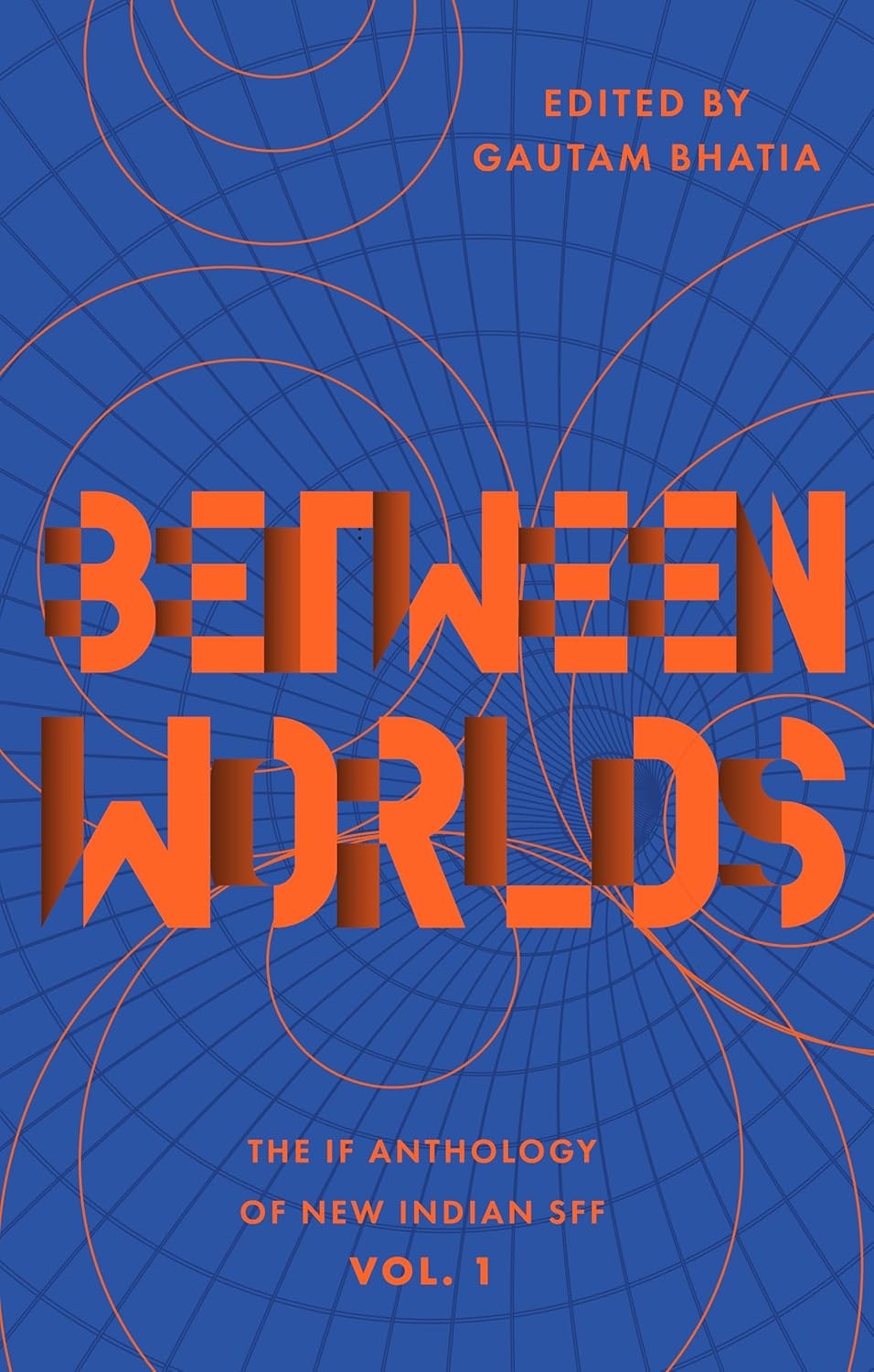
Hello everyone, and welcome to the publication day of Between Worlds: The IF Anthology of New Indian SFF.
If you’re in India, you should be able to get the book from your local bookshop, or from Amazon. If you’re outside India, then - in the usual way that publishing power works - the book will be harder to get, but you can order it from Indian bookshops such as Midland (they deliver worldwide).
In this newsletter, I want to talk a little bit about why - and how - this anthology came about. Those of us who read, write, edit, and review English-language SFF in India have a near-uniform complaint: there isn’t enough Indian SFF being published, and what is published is poorly stocked by bookshops, ignored by the literary mainstream, and - outside a niche circle of aficionados - unknown to readers, including readers of SFF.
The solution to these issues is obvious: Indian SFF will be written and read when there is supporting infrastructure around it. The elements of this infrastructure can be gleaned by looking at SFF abroad: a combination of publishing imprints devoted to genre (Tor, Orbit, Solaris etc), regular conventions (WorldCon, EasterCon etc) and awards (the Hugos, the Nebulas, etc), a culture of online zines, a community of critics, and - finally - end-of-year anthologies. It is only within such a framework that SFF can survive, thrive, and be continuously discovered by new readers.
Last year, Westland took a step towards this by starting IF, the first ever dedicated English-language Indian SFF imprint. This anthology - hopefully the first of its kind - is the second step.
When conceptualising this anthology with Westland, however, I did not want to replicate the gatekeeping and mutual backscratching that have come to define far too many genre anthologies, and almost uniformly define collections of Indian writing. This is the “commission model,” where the editor “commissions” - or invites - work from writers (either known to the editor, or familiar by reputation). The commission model accomplishes two things: it allows editors to ensure that people in their good books - or people in whose good books they want to be - get into the anthology; and it privileges established writers who have name-recognition. Either way, it is clearly exclusionary.
For an Indian genre anthology, the “commission model” is potentially even more pernicious, because of late, there has come to exist a fairly visible divide between Indian genre writers who have foreign publishing deals, and those who do not. The former tend to move in a sub-group of their own, to which the less fortunate ones need not apply. Above all else, I did not want this anthology to replicate recent examples of internationally-published collections, advertised as having a strong “South Asian presence,” but which somehow only features contributions from writers with international book deals.
There is, once again, a very obvious answer to the problem of gatekeeping, and you do not even have to re-invent the wheel: the concept of “double-blind peer review” is more than familiar from the domain of academia, and in this context, put simply, it means that the editor does not know the identity of the writer submitting to them. This is the model that we chose for the anthology - something that, I believe, is virtually never done in genre anthologies whether in India or abroad.
Double-blind peer review does not solve all problems (the editor’s biases remain intact, issues around according a fair hearing to marginalised perspectives crop up in different ways), but at the very least, it gets rid of intentional gatekeeping, and that - I think - is a big thing. In fact, one of the things I’m most proud of about this anthology is that for around half the contributors, this was their debut “professional sale.” Some indication that, in some ways at least, the double-blind peer review system is working.
The other thing, of course, is the scale of the work: we received 233 submissions. I read through all of them, shortlisting thirty. In the second round, the Westland editorial team and I read through the shortlisted entries to select the final ToC (in this second round we did not follow double-blind peer review in order to correct for any obvious skews in representation, should there be some). There were then two rounds of editorial feedback. And that, finally, culminated in the book that is now in bookshops. This was exhausting work, but it was immensely rewarding - and seeing the book out in the wild makes it entirely worthwhile.
Individuals, of course, cannot solve for structural and institutional problems; but individuals can contribute towards creating community, and catalysing the creation of new structures and institutions. With the IF imprint and the anthology, we can perhaps accomplish some of this catalysis. For now, though, if you have - or intend to - get a copy, I hope you enjoy it!
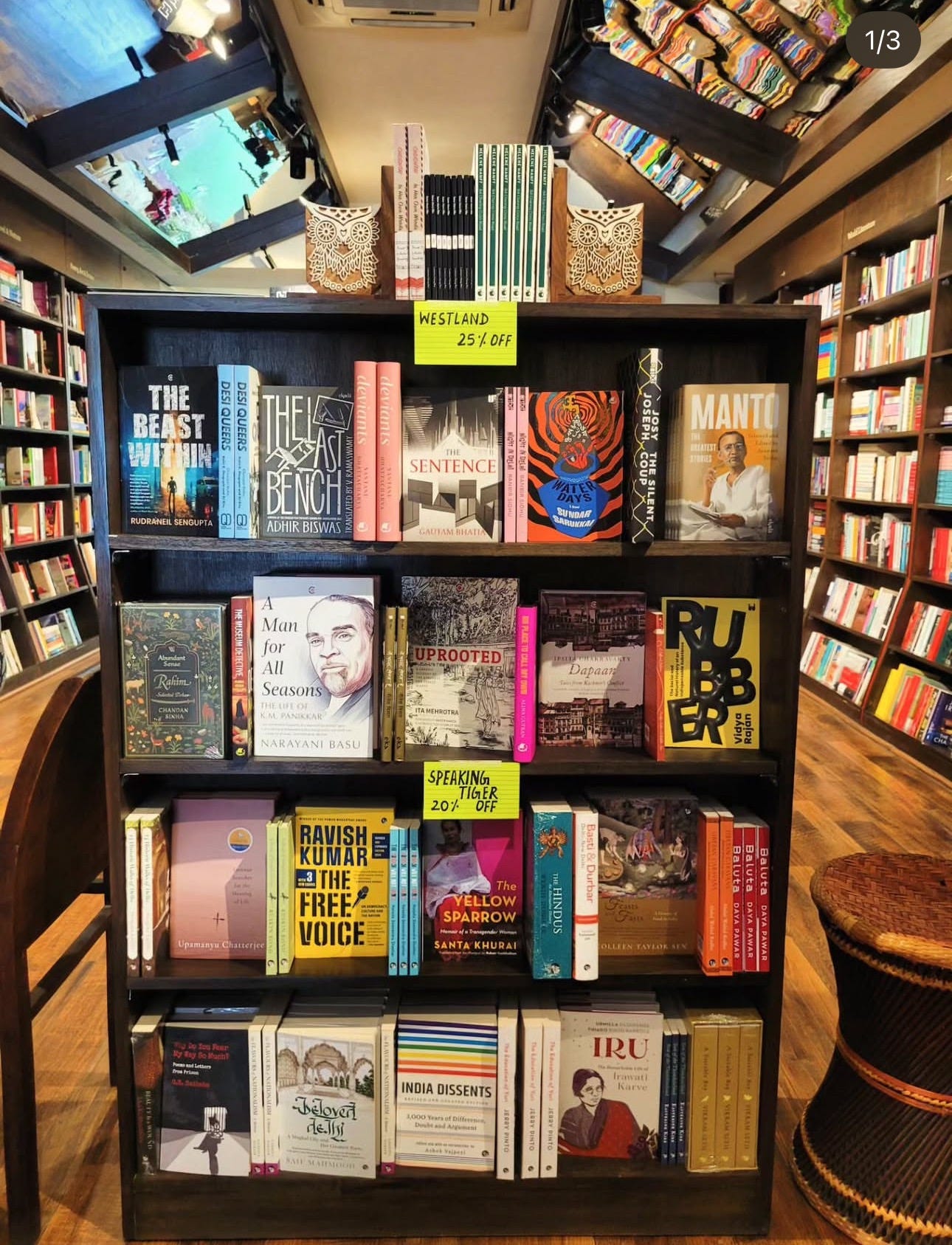
On a different - but related - note, if you’re in Delhi, Westland has an ongoing indie press book sale featuring Westland and Speaking Tiger, and THE SENTENCE is one of those books you can get at a 25% discount until the end of the month.
Normal newsletter programming will return from next week.
Reading this makes me prouder, more honoured and pleased to be associated with this anthology. I respect you and thank you Gautam as well as the Westland team for taking active steps towards addressing the skewed relations of production, power and privilege in the publishing industry!