
Hello everyone, and welcome to another issue of the Words for Worlds newsletter.
A quick writing update: I’m into my third set of rewrites on my WIP sequel to The Sentence/The Fifth Inflection (tentatively titled The Question). This round is following a set of detailed beta-reader comments, and I’m hoping for this to be the draft-before-the-draft, i.e., one step away from the version I’ll hopefully go on submission with. On track to have that done by the end of the year, and I’m starting to get a good feeling about this manuscript, so let’s see how it goes!
What I’m Reading
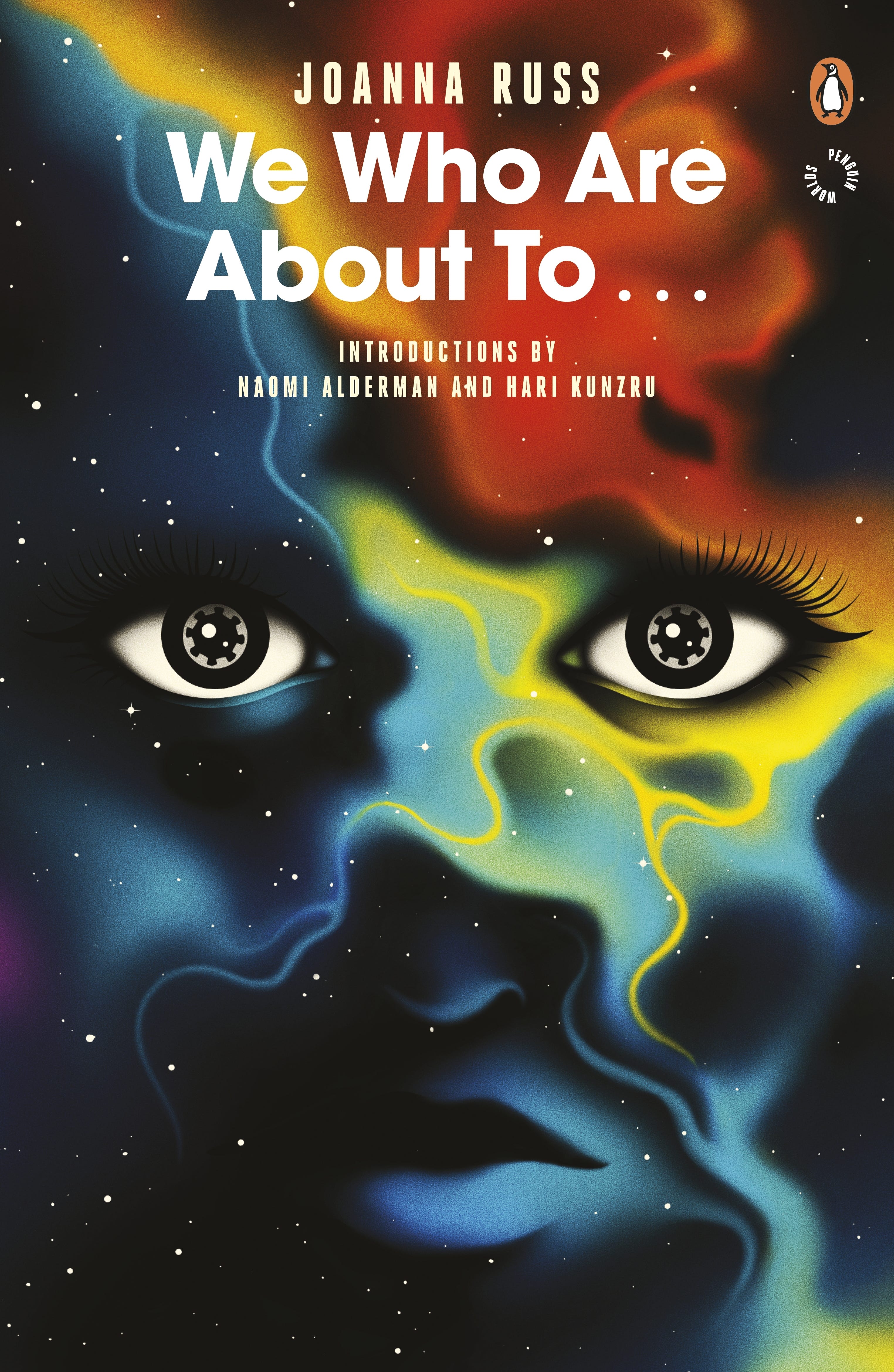
The Delhi Science Fiction Reading Circle is almost four years old, and we’d never read Joanna Russ, one of the most iconic - and enigmatic - figures in the history of the genre. This September, we decided to correct that by doing a Russ double-header: the novella We Who Are About To and then - for those who dared - Russ’s most famous novel, The Female Man.
I don’t think you’d be far wrong in describing We Who Are About To as “Lord of the Flies, but in space.” A space-ship crash-lands on an alien planet, its human cargo spills out, and what follows is the exact opposite of the “golden age” pioneer-type SF of human beings conquering terra nullius in space. In our conversation, it did come up, though, that despite surface appearances, in some ways We Who Are About To is not quite as nihilistic about human nature as Lord of the Flies, but is grounded in a deeper set of ideas: in particular, that it is social relations that give meaning to human life.
The denizens of the spaceship are wrenched out of their context, and a majority of them respond by a feverish desire to perpetuate the race on their new home: a desire that seems quite natural when you first come across it, and it takes the refusal of one of them - the story’s narrator - to defamiliarise it and show how unnatural it is in its context, especially in its attempt to replace the social relations and context that has been lost.
There is, of course, a strong gendered subtext here - how could there not be, in a Joanna Russ book - in that historically, the responsibility and sacrifices made to fulfil these desires have been borne by women. This makes the narrator’s refusal more sharp, and more politically focused; and inverts the frame, in that We Who Are About To can be read as a story about the non-gendered, non-hierarchical forms of meaning-making that require a society to come to fruition, and how their absence leaves a life that is no longer worth living.
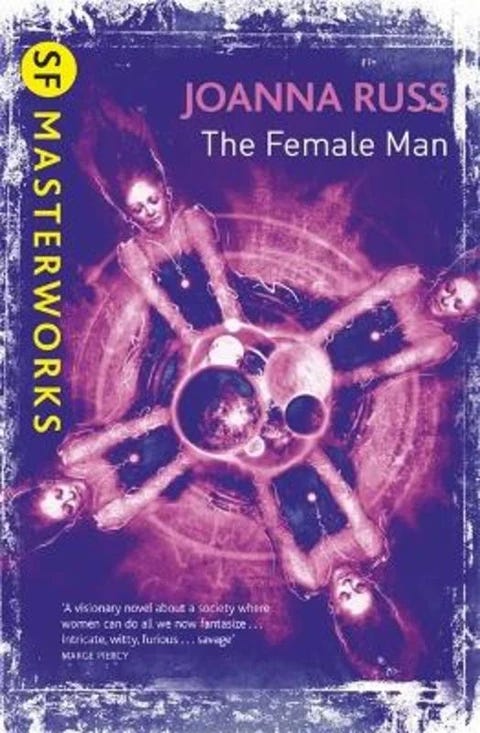
Many years ago, I’d read The Female Man, tempted by its description as a more radical version of Ursula Le Guin’s The Left Hand of Darkness. It was definitely a more radical version of Left Hand, but it was nothing like Left Hand, and also, it was a very difficult read. So I approached this re-read with some amount of trepidation, but I was pleasantly surprised: on this read, I found The Female Man immensely enjoyable.
The interplay between the four women from four different alt-universes - each of which has a different set of gender relations - was dazzling at times; the only occasions when it was a little difficult was when Russ was engaging in what I’d call speculative auto-fiction: using the platform of SF to write a thinly-veiled, lived-experience account of 1960s United States. That is not to say these parts were not engaging - they were - but just that at least half the references were unfamiliar to me, and the other half only vaguely familiar.
On the other hand, the scenes in Whileaway - where Russ had full range of her imaginative faculties to construct a world without men - were the most compelling; and Whileaway native Janet Evason’s fumbling attempts to navigate the sexism of 1960s America was compellingly funny. Here again, I think that defamiliarisation is how you describe what Russ is doing: it is the presence of an alien - who comes from a world without gender norms - that shines a light on the dark absurdity of misogyny and patriarchy: some of whose elements may be obvious to us now, but were evidently much more strongly naturalised in the 1960s.
While reading about Russ’s life, I came across an incident where she questioned why a younger feminist activist was without anger. Reading that, I realised that both We Who Are About To and The Female Man crackle with anger; and it’s perhaps precisely why they crackle instead of sublimating their anger into a vision of the literary craft that the histories of the genre have often tended to erase Russ’s achievements rather than elevate them.
What’s Happening at Strange Horizons
One of my favourite SFF works this year has been S.L. Huang’s The Language of Liars, which I’ve written about previously on this newsletter; last fortnight’s issue of SH carries a review of it.
The Indian Scene
Nothing stirring this week.
Recommendations Corner
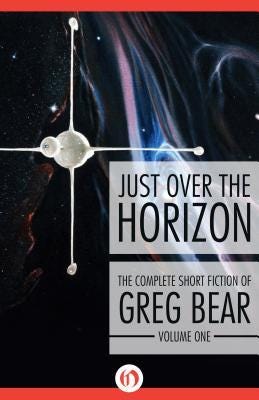
I’ve been delving into Greg Bear for the first time in my life (more on that in a future newsletter), but while some of his more famous works have left me cold, I came across a short story that quickly became one of my favourite genre short stories ever: it’s called “Silicon Times E-Book Review”, and its a robot literary critic reviewing a robot novelist’s latest work. It’s all of four pages long, and in the era of the debates around AI-generated prose, there is something delightfully tender and humane about it. Bear writes that it was published in Nature magazine, but regrettably, it doesn’t seem to be online; you’ll have to read it in the Just Over the Horizon anthology of Bear’s short fiction.